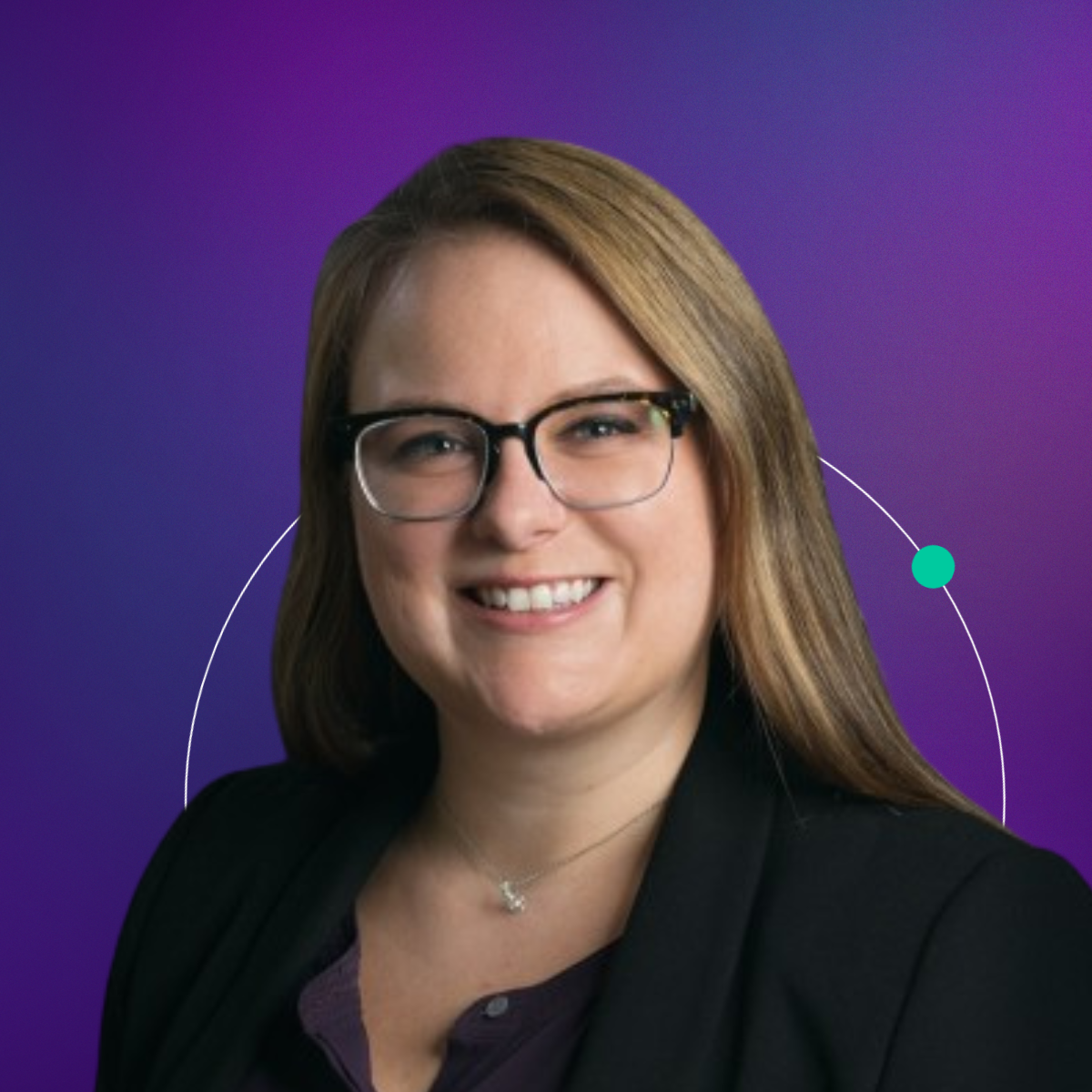
In this insight, Caroline Lustig, Vice President, Client Services at MEDiSTRAVA, an Inizio Medical company, explores what AI means for the future of omnichannel engagement and how it can help create more personalized, adaptive experiences for healthcare professionals.
For years, omnichannel has focused on connecting channels and creating a more consistent HCP experience. AI raises the ambition and enables a true omnichannel system for personalized engagement. It can help us understand what an individual stakeholder believes, identify what is preventing progress, determine the next best action, and deliver the right scientific experience at scale.
At its best, omnichannel becomes more than a communications plan. It becomes an adaptive decision system, aligning the stakeholder, message, content, channel, team and timing around a specific outcome, then learning from every new signal.
AI strengthens that system in three important ways.
1) Turning stakeholder data into better next best actions
Pharma has no shortage of data. Publications, clinical trials, congress activity, field insights, advisory boards, CRM history, surveys, digital behavior and content engagement all provide pieces of the stakeholder picture.
The challenge is connecting them. AI can synthesize these signals to help answer the questions that matter:
- What does this stakeholder understand and believe today?
- What is preventing them from progressing?
- What evidence or experience do they need next?
- Which channel, format and messenger are most likely to help?
This allows us to move beyond static personas and build dynamic learning journeys:
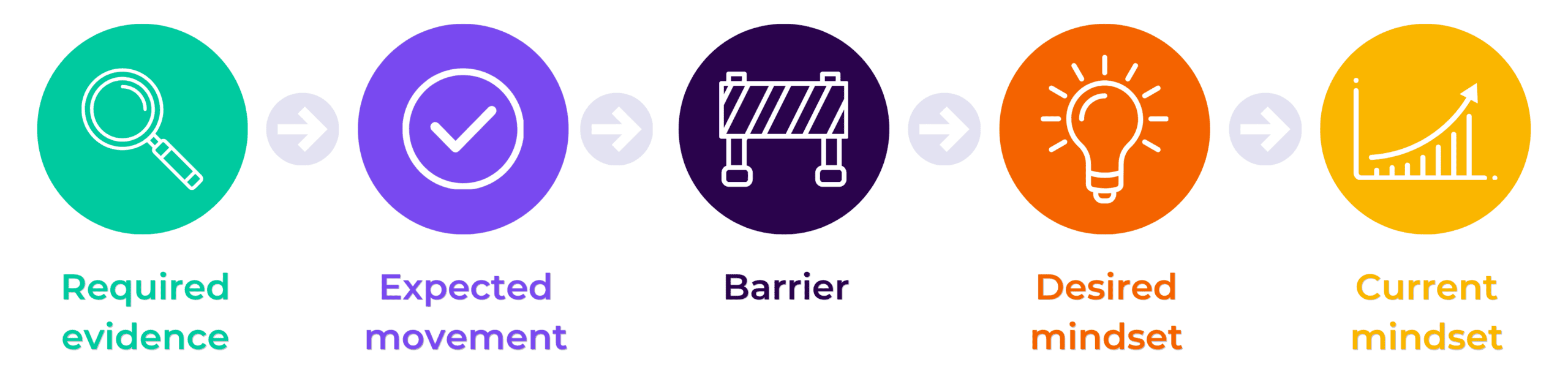
A KOL who understands the mechanism but questions the durability of the evidence requires something different to a community clinician who believes the science but faces an implementation barrier. One may need a focused scientific exchange while the other may need case-based education, a workflow tool, or peer support.
The next best action should be a combination of the channel someone is most likely to use and the scientific or educational intervention most likely to move that individual forward. As new signals emerge e.g., from an MSL discussion, congress interaction, content engagement, or data readout, AI can refresh the stakeholder profile and reconsider the next action.
2) Optimizing scientific content for humans, and AI
AI is also changing how scientific information is discovered. HCPs and other stakeholders increasingly receive a synthesized answer from an AI platform before they ever reach a company website, publication or digital resource. Scientific content now has two audiences: people and machines.
That makes generative engine optimization, or GEO, an increasingly important part of content strategy. GEO is the practice of making credible information easier for generative engines to find, understand and represent accurately.
For pharma, that means ensuring that:
- Scientific terminology is clear and consistent.
- Evidence statements link directly to authoritative sources.
- Dates, authorship and updates are visible.
- Important information is available in accessible text, not buried only in PDFs or graphics.
- Established evidence is clearly distinguished from emerging data and uncertainty.
- Content is structured so individual claims can be traced back to their sources.
GEO should not be about manipulating AI-generated answers. It should be treated as an extension of scientific communication and evidence governance. The goal is straightforward: increase the likelihood that the most credible, recent and relevant scientific information is what gets surfaced.
3) Scaling personalized content without sacrificing rigor
More personalized journeys create a major operational challenge: how do you produce enough relevant content without building an unmanageable library of one-off assets?
The answer is not unlimited AI-generated content. It is a modular, governed content engine. That engine begins with an approved scientific narrative and core body of evidence. The content is then broken into reusable modules organized by:
- Scientific topic
- Stakeholder question or barrier
- Learning objective
- Level of scientific depth
- Journey stage
- Channel and format
- Market, indication and approval status
AI can then help identify the right components and adapt them for a specific use. The same content might become, among other things:
- A scientific infographic for an MSL conversation or congress booth
- Website copy or text summary
- A webinar segment or podcast discussion
The science stays consistent. Its expression changes based on the stakeholder, objective, channel and format. This also changes how content planning begins. Instead of starting with, “We need a webinar,” teams can begin with, “We need to resolve this stakeholder barrier.” The most appropriate content, channel, messenger and sequence can then be selected around that objective.
AI should accelerate this process, not bypass scientific, medical, legal or regulatory review. Every adaptation still requires traceability, accuracy, version control and importantly, human oversight.
The real opportunity is when these three capabilities work together: AI helps determine what a stakeholder needs next; GEO helps ensure the right scientific information can be found and interpreted; AI-enabled content operations help deliver that information through the right channel and format at scale.
Together, they create a stronger next-best-action capability instead of simply more activity, content, or automated outreach, and ultimately support a better understanding of what each stakeholder needs next, and a more scalable way to deliver it.
The opportunity is not to apply AI everywhere at once. The starting point is to understand where AI could have the greatest impact within your existing omnichannel ecosystem – whether by improving decision-making, increasing the discoverability of credible scientific content, or enabling more personalized engagement at scale.
The organizations that get this right can deploy AI intentionally to create meaningful value for stakeholders.
Ready to strengthen your omnichannel strategy?
Contact our team today to discover how we can help you use AI to make smarter decisions, deliver more personalized scientific engagement, and create meaningful value for your stakeholders.
Get in touch with our team to find out more.